

Three vessel brewhouse include a mash tun, lauter tun, and kettle/whirlpool. The material used is SUS 304 stainless steel.Each beer brewing equipment is tailored and manufactured according to the customer's specific brewing process needs and local regulations. Starting a small brewery is a long-term investment, and our goal is to help you realize the rationality of our pricing and find a balance between benefits and investment.
Mash tun, lauter tun, and kettle/whirlpool
Mash Tun and Brew Kettle with steam heating jacket
Device with bottom stirring blades, backwashing device and wort collection pipe
Supporting equipment: double/single-stage plate heat exchanger, pipeline filter, malt liquid mixer, wort sedimentation tank, etc
Standard brewing equipment platform or customized solution
Equipped with hot water tank for spraying and brewing water supply
The valve should be a manual butterfly valve or pneumatic valve
100% TIG welding with pure argon gas shield
Modern automatic plasma & laser cutting
Stringent tank leakage test by water and pressured gas.
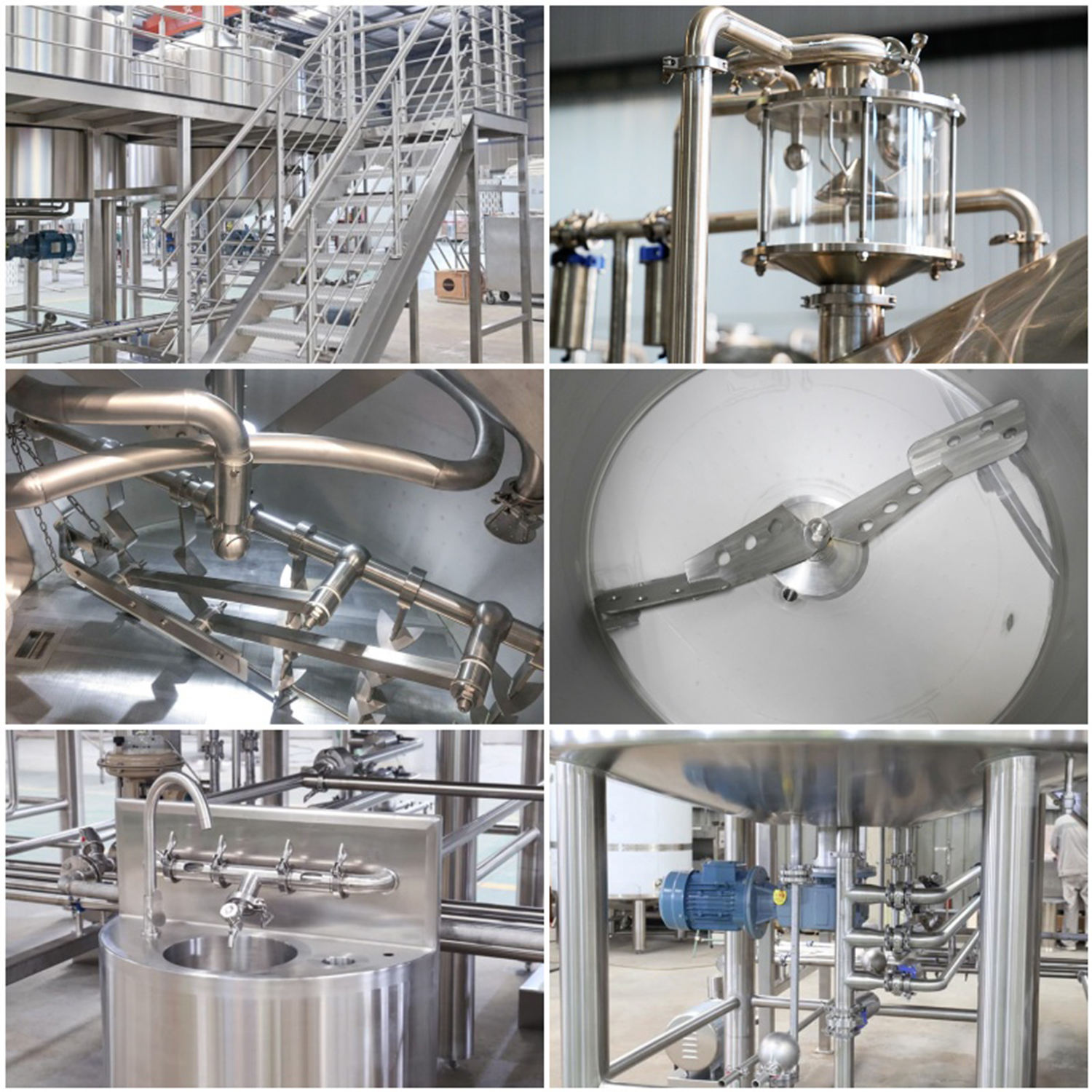
Precise Mashing Initiation: The brewing process starts in the mash tun, combining malted grains with hot water. This step carefully extracts fermentable sugars, with precise temperature control preventing fluctuations that could alter the beer's flavor.
Efficient Lautering Separation: Next, the mash moves to the lauter tun. This vessel uses a false bottom or perforated plate, effectively separating the liquid wort from spent grains. This ensures a clear, flavorful liquid is collected without any solids.
Sterilization and Flavor Boiling: The wort then enters the boil kettle. Here, it is vigorously boiled to sterilize the liquid and integrate hop additions. This crucial stage balances sweetness with bitterness and introduces aromatic qualities to the beer.
Controlled Cooling and Fermentation Setup: While not part of the three main vessels, cooling the wort and transferring it to a fermenter are vital steps that follow. Rapid cooling ensures clarity and prevents contamination, setting the stage for yeast to do its magic.
Enhanced Malt Extraction Efficiency
The system improves malt extraction by providing precise control over temperature and time, leading to higher yield and better-quality beer.
Reduced Energy Consumption and Material Usage
The design optimizes energy use, minimizing heat loss and reducing material consumption, which makes the brewing process more cost-effective and environmentally friendly.
Efficient Steam System Design
The steam system is engineered to maximize heating efficiency and minimize energy loss, ensuring consistent temperature control during brewing.
Optimized Pipe Layout
The pipe layout is designed to prevent wort aeration, ensuring a smooth flow of liquid and reducing material waste, leading to higher-quality beer.
Adjustable Cooker for Various Ingredients
The cooker is adjustable, allowing flexibility to process a wide range of ingredients. It features independent buffer tanks for better control and customization.
Cooling Devices for Current and Future Needs
The cooling system is designed to meet present brewing demands while offering scalability to accommodate future expansion or changes in production volume.
A: A 3 vessel system has three dedicated vessels for mashing, filtering, and boiling, providing higher control accuracy and better efficiency. A single-pot system combines these steps in one pot, which is simpler but less efficient and controllable.
A: Yes, a cooling device (like a cooling coil or spray cooler) is essential to quickly cool boiled wort, preventing bacterial contamination and ensuring the right temperature for fermentation.
A: It's ideal for experienced brewers but can be learned with practice, especially with proper guidance and training.
A: Yes, the beer equipment could be customized.
A: We use Wooden Cases or Steel Frames for safe and secure transportation.
A: ZPET promises a 10-year warranty for the beer equipment.


