
Views: 0 Author: Site Editor Publish Time: 2025-09-25 Origin: Site
You need the right tools to make good beer. It does not matter if you are new to homebrewing or work in a big brewery. Knowing about your beer brewing equipment is very important. Equipment can be different for each brewer:
| Type of Brewer | Equipment Type | Description |
|---|---|---|
| Homebrewer | Brewing Kettle | A small metal pot used to boil hop wort. |
| Homebrewer | Fermentation Barrel | A plastic or glass container for making beer. |
| Professional Brewer | Brewery | A system with barrels, filters, and brewing pots. |
| Professional Brewer | Fermentation Tank | Big tank for beer to ferment and get ready. |
Wherever you brew, knowing your tools helps you make better beer.
Pick the best fermenter for your brewing needs. Stainless steel lasts long and is simple to clean. Glass lets you watch the fermentation process.
Buy a good brew kettle that matches your batch size. A kettle that keeps heat well helps your ingredients work better.
Always clean and sanitize your brewing equipment after each use. This stops bacteria from ruining your beer and gives better flavor.
Think about your future brewing plans when picking equipment. Modular systems let you upgrade as you make more beer.
Learn about common brewing mistakes. Cleaning well, using the right materials, and taking care of equipment can make your brewing much better.
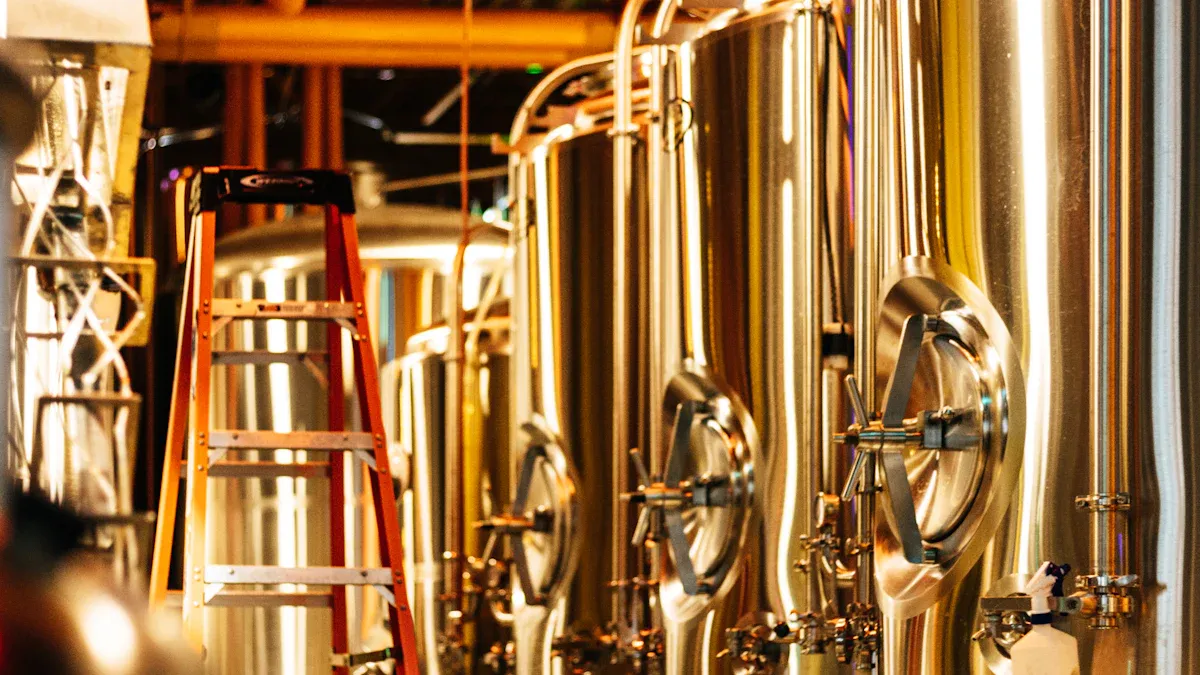
Fermenters are where beer is made. You pour wort in, add yeast, and wait. The yeast changes the wort into beer. There are different fermenters. Each has good and bad points.
Conical fermenters are liked by many brewers. Their shape lets you ferment and store beer in one place. You can remove yeast and sediment easily. This yeast can be used again. You do not need to siphon the wort. They are made of stainless steel, so cleaning is simple.
Cylindroconical fermenters are used a lot in breweries. Their design helps beer ferment faster. They cost less to make and use. Mixing is better, and temperature is easier to control. Cleaning and sanitizing are also easier.
These fermenters help with yeast handling. You can recover yeast and automate the process. They let you collect CO2 during fermentation. You can use this CO2 again.
The conical shape helps you get yeast from the bottom. Yeast and sediment settle there. You can collect and reuse yeast for new batches.
Homebrewers may use glass carboys or big mouth bubblers. These are easy to use. You can see the beer fermenting. Commercial brewers use big stainless steel brite tanks or cylindroconical fermenters. These help control temperature and make cleaning easier.
Glass Fermenters: Heavy and breakable. Light can get in and hurt your beer. Cleaning is hard because the neck is small.
Plastic Fermenters: Light and cheap. Easy to clean, but they scratch. Scratches let in air, which can spoil beer.
Stainless Steel Fermenters: Strong and simple to clean. They keep out light and air. Your beer stays safe. Good for using a long time.
Pick a fermenter that fits your batch size. It should keep the temperature steady. Good temperature helps yeast work well.
The brew kettle is for boiling wort and mixing things. You need a kettle that fits your batch size. It must handle heat. Homebrewers use small kettles. Big breweries use huge kettles.
| Material | Characteristics | Common Sizes |
|---|---|---|
| Stainless Steel | Tough, does not rust, easy to clean, safe. | Many sizes for different batches |
| Aluminum | Light, heats up fast, but can rust and is harder to clean. | Many sizes for different batches |
| Copper | Heats up very well, but costs more and needs care. | Not used much, size varies |
Some kettles have special things to help you brew. Some have temperature gauges or spigots for draining. Big kettles in breweries have better temperature control and insulation.
| Kettle Design Feature | Impact on Brewing Efficiency |
|---|---|
| Dead Space Minimization | More beer and better quality |
| Modern Features | Saves energy and heats or cools faster |
You want a kettle that heats quickly and keeps the temperature steady. This helps your ingredients work best and makes brewing easier.
After boiling, you must cool the wort fast. Cooling stops bacteria and helps yeast start well. There are different wort chillers. Each cools at its own speed.
| Type of Chiller | Cooling Speed |
|---|---|
| Plate Chiller | Fast |
| Immersion Chiller | Slow |
| Counterflow Chiller | Very fast |
Homebrewers like immersion chillers. They are easy to use and clean. If you want faster cooling, try a plate or counterflow chiller. Big breweries use plate or counterflow chillers for quick cooling and better control.
You need good measuring tools for great beer. These tools check temperature, gravity, and pH. They help you know if your brew is going well.
Refractometer: Checks final gravity. You need a calculator for the right number.
pH Meter: Measures mash pH. Very exact, shows two decimal places.
Test Strips: Quick way to check pH. Not as exact as a meter.
Hydrometer: Checks the specific gravity of wort and beer.
Digital Scale: Weighs ingredients better than old scales.
Analytical Lab Instruments: Tools like EasyDens give the best readings.
Watch the temperature too. Glass thermometers are common but can break. Sometimes they are not exact. Kettle thermometers can be set right and are close within two degrees. Digital thermometers are more exact and simple to use. Keeping the right temperature helps make good beer.
Digital thermometers are more exact than old ones.
Old thermometers can be wrong and break easily.
Mash temperature matters for brewing. It changes alcohol and body.
Clean tools make better beer. If you do not clean, you get bacteria and bad taste. Both homebrewers and big breweries need good cleaning gear.
Clean and care for equipment to stop bacteria. Bacteria can change flavor and mess up fermentation.
Cleaning helps keep brewing cycles short by keeping temperature right.
Cleaning on time keeps equipment working longer. It stops rust and damage.
Good cleaning makes brewing better and saves time.
Cleaning well keeps beer safe for people to drink.
Gloves: Wear thin gloves when using cleaning chemicals.
Rags: Wipe surfaces and wash rags after each use.
Cleaning Brushes: Use different brushes for each tool. Color them so you do not mix them up.
Cleaning Products: You need three types: alkali detergent, acid cleaner, and sanitizer.
Cleaning means washing all parts and then sanitizing to kill germs. Always clean your beer brewing equipment after you use it. Use products safe for stainless steel and aluminum. Do not use bleach. Bleach can hurt your brewing equipment. After cleaning, use sanitizer and follow the directions. This keeps your homebrew equipment working well.
When you pick homebrew equipment, think about what it is made of. Stainless steel lasts a long time and is easy to clean. It does not rust or break easily. You can use stainless steel for many years. Glass fermenters let you see your beer as it brews. But glass can break if you drop it. Plastic is light and cheap. It is easy to carry and costs less. But plastic can get scratched. Scratches can hold bacteria and ruin your beer. Here’s a quick look:
| Material Type | Advantages | Disadvantages |
|---|---|---|
| Stainless Steel | Durable, easy to clean, keeps temperature steady | Costs more upfront |
| Glass | Non-porous, lets you see your brew | Fragile, needs careful handling |
| Plastic | Lightweight, affordable | Scratches can hold bacteria |
Stainless steel is best if you want less trouble. It helps keep your beer clean and safe. You will spend less money fixing things. Good materials mean you do not need repairs often.
Think about how much beer you want to make. Most people start with 2.5 to 15 gallons. Ten gallons is a good amount for most homebrewers. It gives you enough beer and does not take too long. The size of your batch decides what fermenter and kettle you need. Bigger batches need bigger tools and more space. If you want to make more beer later, buy equipment that can grow with you.
Tip: If you make bigger batches, hops work differently. You might need to change your recipe to keep the taste the same.
How much money you have changes what you can buy. Basic kits cost between $48 and $100. Fancy systems cost a lot more. Simple setups are cheaper to take care of. Professional gear costs more to fix and keep working. If you buy good equipment now, you save money later. You will not have to fix things as much.
| Equipment Type | Cost Range |
|---|---|
| Basic Homebrew Kits | $48 - $100 |
| Advanced Homebrew Systems | $$$$ - $$$$$ |
Think about the future when you buy brewing gear. Modular systems let you start small and add more parts later. You can get a bigger fermenter or new sensors. If you want to make more beer, your equipment should be able to grow. Look for open spaces and easy ways to reach your tools. Automation like touchscreens and temperature sensors help you control brewing as you make more beer.
| Scalability Feature | Benefit |
|---|---|
| Modular design | Easy upgrades |
| Automation | Better temperature control |
| Open layout | More space for fermenters and brewing gear |
Pick equipment that fits your goals and your space. It should let you try new yeast and ingredients. Start with what you need now. Think about what you might want in the future.
Some people think rinsing is enough. But not cleaning well can ruin your beer. Dirt left on equipment lets germs get in. These germs change the taste and mess up brewing. Everything that touches beer must be sanitized. If you skip this, your beer may taste bad. Fermentation can also go wrong.
If you forget to clean hoses, bacteria can grow.
Not sanitizing fermenters can spoil your beer.
Dirty measuring tools give you wrong results.
Tip: Clean and sanitize every part before brewing. Your beer will taste better. Yeast will work the way you want.
Picking the wrong material for gear causes problems. Stainless steel is best because it does not react with beer. It is easy to clean and keeps germs away. Plastic or old metal can get scratched or rusty. Scratches and rust hold bacteria and change taste. Some materials react with beer and make it taste bad. The type of equipment can change how your beer tastes. If you want clean flavor, use good gear.
Using gear from different brands can cause trouble. Sometimes, parts do not work together. You might see error codes or things may not work right. Here are some common problems:
| Compatibility Issue | Description |
|---|---|
| Communication Protocol | Brands use different protocols, so units may not connect. |
| Control Board Mismatch | Boards can reject units because serial IDs do not match. |
| Firmware Mismatch | Error codes show up when firmware does not match, causing problems. |
Your indoor unit may not respond.
Sometimes, only the fan works because the compressor cannot connect.
Firmware mismatches can stop brewing.
If you do not do regular maintenance, gear will not last. Cleaning and checking gear keeps it working well. If you ignore these jobs, parts wear out faster. You may have breakdowns and need costly repairs. Regular care helps gear run smoothly and keeps temperature steady. If you want great beer every time, make maintenance a habit. Your brewing will stay on track. Yeast will work better.
Note: Good maintenance helps control temperature, stops failures, and saves money over time.
You want your beer brewing equipment to last and make great beer every time. Cleaning is the first step. Always remove grime and debris before you sanitize. If you skip this, sanitizers will not work well. Here are some cleaning agents you can use:
Non-caustic alkaline-based cleaners like Exchilterator Brewery Wash, Five Star PBW, or Craft Meister Alkaline Brewery Wash break down organic residues without harsh chemicals.
Caustic cleaners such as sodium hydroxide or potassium hydroxide dissolve tough organic matter but need safety gear.
Unscented dish soap works for quick jobs, but rinse it well to avoid off-flavors.
Oxi-Clean or One Step can help clean, but do not use them for fermenters or bottles.
Bleach is strong but can leave odors and damage equipment if not rinsed well.
Tip: Non-caustic cleaners are safer for most homebrew equipment and still get the job done.
After cleaning, you need to sanitize. This step kills germs and keeps your beer safe from spoilage. Sanitizers make sure no bacteria or wild yeast ruin your batch. Here’s a quick look at common sanitizers:
| Sanitizer | Effectiveness | Notes |
|---|---|---|
| Bleach | Kills 99.9% | Cheap, but rinse well to avoid flavor problems. |
| Iodophor | Effective | No rinse needed, but can stain plastic if too strong. |
| Star San | Effective | No rinse, works fast, but yeast may not grow well in leftover solution. |
Sanitizers work best when you use them right before brewing. Always follow the instructions on the label. If you use too much, you might get stains or odd tastes.
Storing your equipment the right way keeps it clean and ready for next time. Follow these steps:
Clean every part after brewing.
Use a no-rinse sanitizer before putting things away.
Let everything air dry fully to stop mold and bacteria.
Check for any leftover residue or damage.
Take apart pumps and hoses so you can clean and dry them better.
Store your gear in a cool, dry place.
Put small parts in airtight containers to keep out dust and moisture.
Note: Drying your equipment well is just as important as cleaning it. Moisture can lead to mold and bad smells.
Sometimes things go wrong, even if you take care of your gear. Here are some common problems and what you can do:
If you have trouble with temperature, check your sensors and insulation.
If your mash tun clogs, look at your grain bed and water flow.
Cloudy beer? Check your filters and make sure you store your beer at the right temperature.
Off-flavors often mean you need better sanitation or more steady temperature. Sometimes, wild yeast or bacteria sneak in.
If you fix small problems early, you save time and keep your beer tasting great.
You might wonder when it is time to upgrade your brewing setup. If you find yourself brewing more often or making bigger batches, your old gear may slow you down. Maybe your fermenter feels too small, or you want better control over temperature. If you see leaks, rust, or cracks, your equipment needs an update. Sometimes, you just want to try new brewing styles or recipes. Upgrading helps you brew better beer and makes the process smoother.
Tip: If you spend more time cleaning or fixing your fermenter than brewing, it is time for a change.
When you decide to upgrade, you can choose advanced brewing tools. Stainless steel fermenters last longer and keep your beer safe. You can get a brew kettle with a built-in thermometer or a spigot for easy pouring. Some setups have pumps that move wort from the kettle to the fermenter. These upgrades save time and help you brew with less mess. You can also add a wort chiller that cools your brew faster. Advanced gear gives you more control and better results.
If you want to brew more beer, you need bigger equipment. A larger fermenter lets you make double or triple your usual batch. Bigger brew kettles hold more wort and heat up faster. You may need a stronger burner or a bigger mash tun. Brewing larger batches means you can share your beer with friends or enter competitions. Make sure your space can handle the new gear before you upgrade.
| Equipment | Standard Size | Large Batch Size |
|---|---|---|
| Fermenter | 5 gallons | 10+ gallons |
| Brew Kettle | 5 gallons | 15+ gallons |
New technology makes brewing easier and more fun. Many brewers now use smart systems that control temperature and timing. You can find AI-driven brewing tools that help you manage every step. Some systems use big data to improve your recipes and track fermentation. Green brewing technology saves water and energy. New materials keep your fermenter cleaner and help your beer taste better.
Intelligent automated brewing systems use AI for better control.
Green brewing technology reduces waste and saves energy.
AI and big data help you perfect your brew and lower costs.
New materials and processes keep your fermenter clean and efficient.
If you want to brew like a pro, try adding some of these new tools to your setup. You will see better results and enjoy brewing even more.
You now know the basics of beer brewing equipment. Use the right tools, keep everything clean, and watch out for common mistakes. Take care of your gear, and you will brew better beer every time.
Try new equipment as you grow.
Keep learning and improving your skills.
Share your brewing stories or questions below!
Brewing is a journey. Every batch teaches you something new.
You should clean your equipment after every batch. This keeps bacteria away and helps your beer taste fresh. If you skip cleaning, you risk bad flavors and spoiled beer.
Stainless steel works best for most brewers. It lasts a long time and cleans up easily. Glass lets you watch your beer, but it breaks easily. Plastic costs less, but scratches can trap germs.
Most basic kits handle small batches, usually up to 5 gallons. If you want to brew more, you need bigger kettles and fermenters. Upgrading your setup makes brewing large batches easier.
Check your cleaning and sanitizing steps first. Make sure you kept the right temperature during brewing. Off-flavors often mean germs got in or the yeast did not work well.
You do not need fancy tools. A digital scale helps you measure grains and hops. A hydrometer or refractometer checks your beer’s gravity. These tools help you brew with better control.


