
Views: 0 Author: Site Editor Publish Time: 2025-12-03 Origin: Site
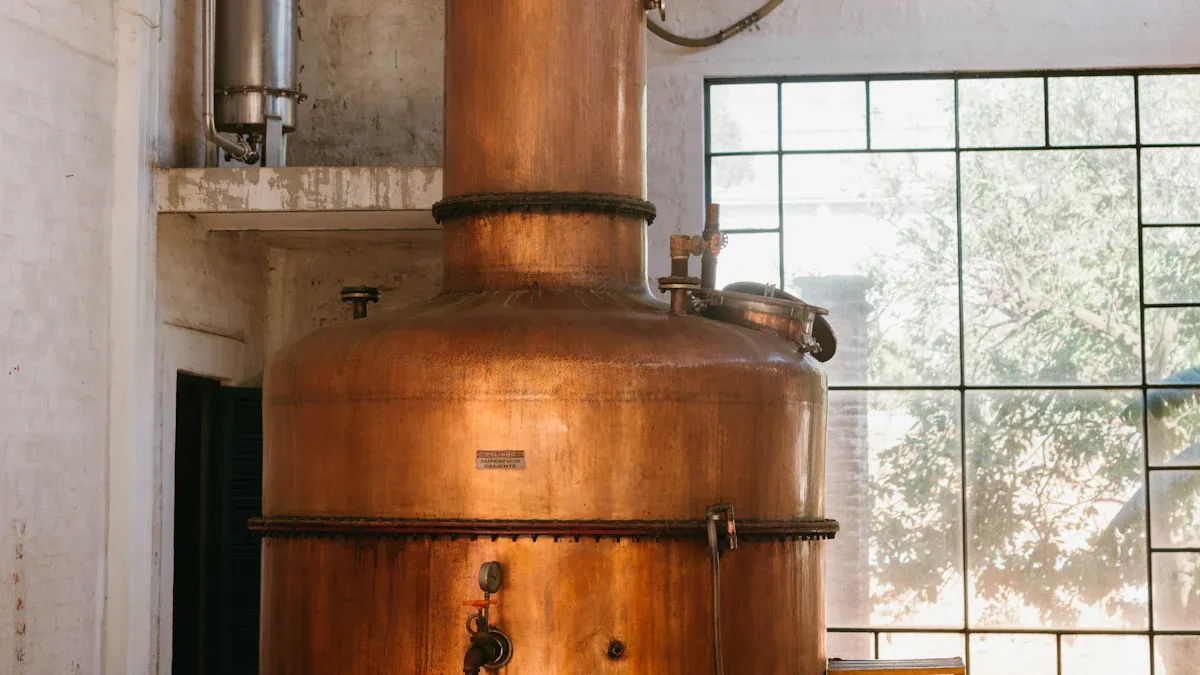
Image Source: pexels
When selecting distilling equipment, it’s important to consider your production goals and desired output. Every distillery operates at a unique scale—some individuals use distilling equipment for small batches at home, while others invest in distillery equipment for a craft operation. Larger producers rely on commercial distilling equipment to manage higher volumes. Most craft distilleries produce fewer than 2,500 cases annually, and smaller distillers typically make 10,000 or fewer proof gallons. Choosing the right distillery equipment not only helps you save money but also improves efficiency. You can select distilling equipment that meets your current needs and opt for commercial distilling equipment that allows for future expansion.
Craft distilleries are limited to producing no more than 750,000 proof gallons per year.
Approximately 60% of craft distillers sell fewer than 2,500 cases annually.
Smaller distillers account for 11.7% of all cases sold.
Pick distilling equipment that matches what you want to make. Think about what you need now and what you might need later. This helps you avoid spending extra money in the future.
Choose the right materials for your equipment. Stainless steel lasts a long time and is simple to clean. Copper helps make better flavor by taking out bad stuff.
Make a plan for your space and money. Small setups cost less and can fit in houses. Bigger systems need more money and more space.
Always follow safety rules and local laws. Make sure your equipment is allowed where you live. This keeps you safe and helps you avoid fines.
Use automation to help your work go faster. Automated systems help make things the same every time. They also lower labor costs and help your distillery work better.
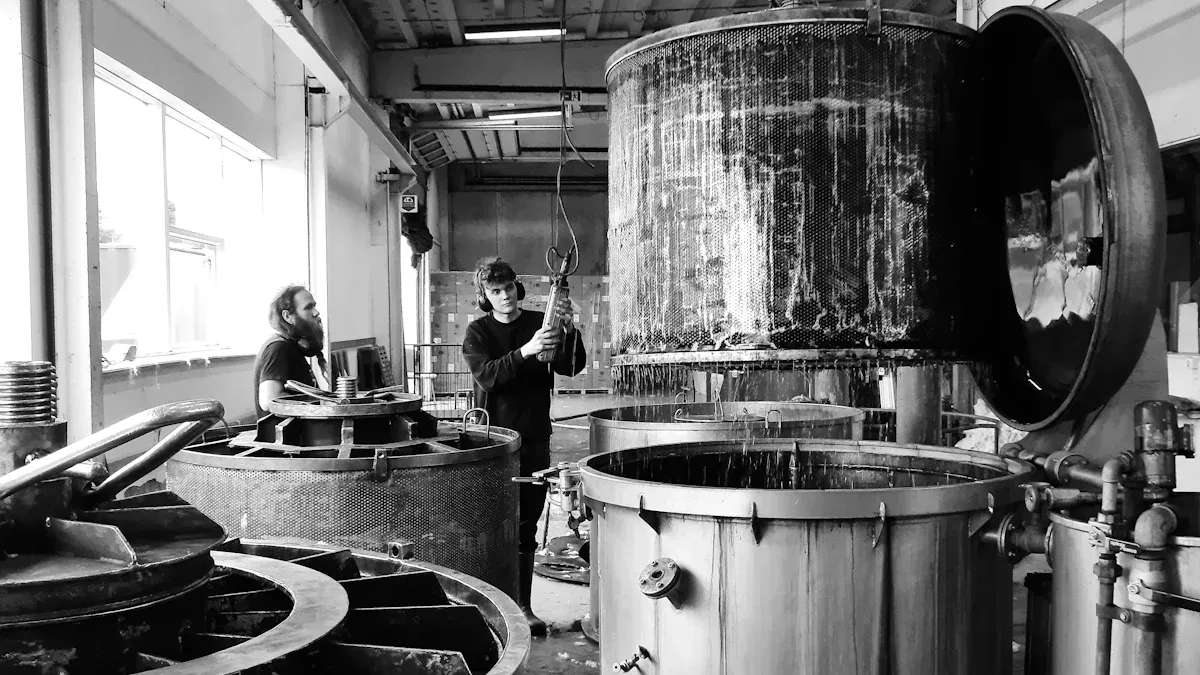
Image Source: pexels
If you want to distill at home, you need the right tools. Small batch setups can be 200L, 300L, or 400L. These sizes are good for hobbyists. They fit in most homes and let you try new recipes. For making brandy, you need some important parts:
Fermentation equipment like a stainless steel tank helps turn juice or wine into alcohol.
A wine making kit gives you tools to make your mash.
A big spoon or mash paddle helps you mix things.
A copper pot still separates alcohol from water and other stuff.
A condenser cools the vapor and makes it liquid again.
A cooling system keeps the temperature steady while you distill.
These distilling tools work well for small craft distilling. They help you make good spirits in batches that fit your needs.
Tip: Begin with a simple setup. Upgrade later if you make more. This saves space and money.
The materials you pick for your distilling tools matter. Stainless steel and copper are the most common choices. Stainless steel lasts long and is easy to clean. Copper takes away bad sulfur and makes the smell better. Both help you make good spirits.
Here is a table that shows how materials change your tools and product:
| Material | Benefits | Impact on Quality |
|---|---|---|
| Stainless Steel | Strong, clean, easy to care for | Keeps purity, does not change alcohol |
| Copper | Removes sulfur, makes aroma and flavor better | Improves taste, makes better spirits |
Look for strong materials when you buy distilling tools. This makes your spirits taste good and your tools last longer.
Think about cost and space before you buy distilling tools. Small setups like 200L or 300L cost less and fit in homes. Bigger setups like 500L or 1 ton need more room and money. Stainless steel tools usually cost less than copper. Copper gives better flavor.
Small setups save money and space.
Big setups make more, but need their own area.
Pick tools that fit your needs now and later.
Note: Check your space before you buy. This helps you avoid problems when you set up.
You can make brandy at home by following easy steps. Each step uses special distilling tools to make good spirits.
Fermenting: Use a tank to turn fruit sugar into alcohol.
Distilling: Heat the liquid in a copper pot still to get more alcohol.
Polishing: Filter the spirit to clean it and make it taste better.
Aging: Put the spirit in oak barrels to add flavor and color.
Blending and Bottling: Mix and bottle the brandy for use.
You can use these steps for small craft distilling. The process lets you control each part and make brandy with good flavor and smell.
Remember: Be patient. Aging your brandy makes it smoother and richer.
When you move up from home setups, you need better equipment. Medium-scale systems are bigger, from 500L to 2 ton. These tanks and pot stills help you make more brandy and spirits. Look for strong stainless steel tanks and copper pot stills. These materials help flavor and make cleaning easy. Many craft distilleries use cooling and filtration units. These keep spirits pure and steady. You can pick equipment with support systems like CIP for cleaning. Automated controls help you get better results.
| Feature | Benefit |
|---|---|
| Compliance & Safety Standards | Makes sure your product is safe and follows the law. This is important for brandy makers. |
| Support Systems | CIP keeps things clean, cooling controls temperature, and filtration keeps spirits pure. |
| Material Selection | Copper makes flavor better, stainless steel is strong and easy to clean. |
| Capacity & Scalability | Bigger equipment helps you make more and grow later. |
| Automation & Control Systems | Automation helps keep flavor the same and lowers labor costs. |
Automation helps your distillery work faster and better. You can use machines to handle grain and control temperature. This keeps recipes the same every time. Real-time data helps you repeat good batches. Automation can make things 25-40% more efficient. You make fewer mistakes and save money. One person can run big batches and clean the system. Automation keeps temperature close to perfect. This helps you get more ethanol and less waste.
“Getting information is very important for distilleries... With data collection, you record everything as it happens. You can repeat the same temperatures and pressures and try again.”
| Aspect | Description |
|---|---|
| Workflow Optimization | Making production better helps your business last longer and work well. |
| Automation Strategies | Advanced machines make work easier and cut down on manual jobs. |
| Performance Metrics | Programs to improve help keep standards high and make production better. |
You must follow safety rules in every distillery. Good labels, training, and checks keep your team safe. Machines need safety guards and lockout/tagout steps for repairs. Workers wear flame-resistant clothes and goggles. You should test air in tight spaces and keep air moving. Emergency plans help you get ready for surprises.
| Safety Standard | Key Requirements |
|---|---|
| Hazard Communication | Label chemicals right and train workers to handle them safely. |
| Process Safety Management | Do regular checks, keep up with repairs, and train for emergencies. |
| Machine Guarding | Put guards on machines and check safety features often. |
| Lockout/Tagout | Shut down and unplug equipment for repairs, and train workers on these steps. |
| Confined Spaces | Test air, keep air fresh, and have rescue plans. |
| Personal Protective Equipment | Give flame-resistant clothes, gloves, goggles, and ear protection. |
| Combustible Dust | Clean often, keep air moving, and check for dust dangers. |
| Electrical Safety | Use safe equipment, ground wires, check often, and train workers. |
| Fall Protection | Put up guardrails, check safety gear, and train workers. |
| Emergency Preparedness | Make emergency plans and train for surprises. |
Plan for growth when you pick distilling equipment. Bigger setups like 1 ton or 2 ton help you expand. Many craft distilleries have problems like market access and costs. You can beat these by choosing equipment that can change and grow. Look for systems that let you upgrade and add automation. This helps you meet demand and stay ahead.
Tip: Pick distilling equipment that fits your needs now and lets you grow later.
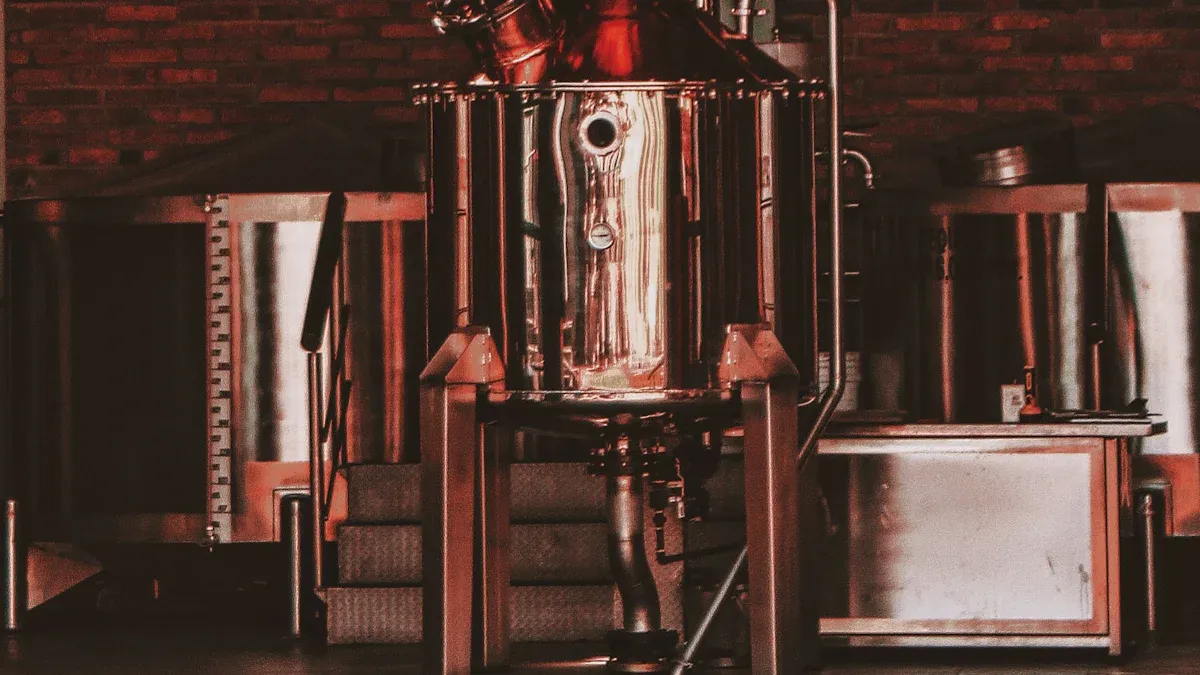
Image Source: pexels
You need commercial distilling equipment for making lots of spirits. These systems handle big batches and help you meet demand. You can pick from sizes like 200L, 300L, 400L, 500L, 1 ton, and 2 ton. Each size works for a different job in commercial production. The table below shows what each size is used for:
| Size | Application |
|---|---|
| 50 gallons | Try new recipes and test small batches. |
| 100 gallons | Make small amounts for local sales. |
| 300 gallons | Help craft distilleries grow bigger. |
| 500 gallons | Make lots for big commercial sales. |
You can choose equipment that fits your business plans. Large distillery equipment has stainless steel tanks, copper pot stills, condensers, and cooling systems. These parts work together to make good spirits like brandy.
Modern commercial equipment has new features. You can get mash agitators that stir safely. Voltage flexibility lets you use different power sources. You can pick stainless steel or copper for important parts. CIP pumps and pipes make cleaning simple. Spirit collection tanks help you separate heads, hearts, and tails for better spirits.
You can make your distillery work better with advanced controls. Many commercial systems use sensors and PLCs to control heat and reflux. Automation helps you repeat the process and save energy. You get the same results and better yield.
You should always try to improve and use new ideas. Standards like ISO 9000 and Total Quality Management help keep quality high. Quality management makes sure your spirits taste the same every time. Customers trust your brand when you make products they expect.
You can use automation from big distilleries in smaller ones. PLCs and HMIs give you more control. Industrial practices help you make spirits faster and better.
Tip: Automation and process control save time and lower mistakes. You can spend more time making great spirits.
You must keep your equipment in good shape. Regular maintenance stops breakdowns and keeps things running. Clean your equipment often to stop rust and wear. Inspections help you find leaks or pressure problems early. Taking care of problems before they happen keeps you safe.
| Maintenance Requirement | Description |
|---|---|
| Cleaning | Stops rust, wear, and damage to seals and valves. |
| Inspections | Finds leaks or pressure problems, so you lose less time. |
| Proactive Measures | Stops failures and keeps you safe. |
| Monitoring for Scale and Blockage Issues | Stops slowdowns and delays in making spirits. |
| Addressing Product Contamination | Keeps your spirits safe and high quality. |
| Preventing Corrosion and Equipment Wear | Makes sure everything works safely. |
| Reducing Energy Consumption | Helps heat exchange work better and saves money. |
| Ensuring Safety Standards | Helps you follow the rules. |
Check distillation columns for blockages. Clean your equipment on a schedule to stop buildup. Predictive maintenance helps you find problems before they get worse. Keep a record of all maintenance work. Lubricate moving parts to stop wear.
Manufacturers give support for commercial equipment. You get help with design, setup, automation, cleaning, and support. Engineers give you personal help. You get help with controls, pipes, and field service. Support helps you fix equipment and process problems.
Note: Good maintenance and support keep your equipment working well. This helps you make high-quality spirits.
You must follow strict rules to run a commercial distillery. In the United States, you need a Federal Distilled Spirits Plants permit from the TTB. Most states need a state permit or license. Local zoning laws decide where you can put your distillery. Labels must follow TTB rules and show alcohol content and health warnings. You must follow rules for wastewater and waste.
You need licenses at federal, state, and local levels. Labels must follow federal rules and show product details. You must know state rules for selling spirits to grow your business.
If you work in Europe, you follow different rules. Each country sets its own taxes on imported spirits. The EU needs a minimum VAT of 15% on alcoholic drinks. Countries like France and Germany have higher rates. Excise duties are higher in Europe than in the United States.
Tip: Always check local, state, and federal rules before you start. This helps you avoid fines and keeps your business safe.
Picking the right distilling equipment depends on how much you want to make. The table below shows how size and equipment type go together. It helps you match your goals with the best distillation equipment. If you want to make brandy, a copper pot still is good for small or medium batches. Bigger businesses may need hybrid or column stills for better results.
| Capacity | Equipment Type | Typical Use | Key Features |
|---|---|---|---|
| 200L | Small Copper Pot Still | Home or micro distillery | Manual control, flavor focus, easy cleaning |
| 300L | Copper Pot Still | Small batch craft | Good for brandy, preserves aroma |
| 400L | Copper Pot Still | Craft distillery | Flexible, artisanal quality |
| 500L | Medium Pot/Hybrid Still | Craft or regional | More output, some automation |
| 1 ton (1000L) | Large Pot/Hybrid Still | Regional distillery | Higher efficiency, supports growth |
| 2 tons (2000L) | Hybrid/Column Still | Industrial distillery | Maximum efficiency, automation, high capacity |
Note: Brandy distillation equipment uses copper pot stills for the best flavor and smell.
When you look at distillation equipment, check some important features. These features help you pick what works best for you:
Scale of Production: Decide if you make spirits for yourself or to sell. Small pot stills are good for home. Big column stills are better for large businesses.
Type of Spirit: Pot stills are best for rich flavors like brandy. Column stills work better for strong spirits.
Budget: Pot stills cost less. Hybrid or column stills save money for bigger batches.
Use this guide to choose distilling equipment that fits your goals. Always think about what you need now and what you might need later. The right distillation equipment helps you make good spirits at any size.
Start by thinking about your goals. Decide what you want your brand to show. Pick recipes you like and find good ingredients. Make sure you follow all rules in your area. Plan how you will make your spirits. Think about how your building will be set up. Make a system to keep track of supplies and inventory. Here is a simple checklist to help you:
Set your vision and brand identity.
Choose recipes and source quality ingredients.
Learn about compliance and regulations.
Organize your production process and facility layout.
Create a supply chain and inventory plan.
Space is important when picking distilling equipment. Measure your room before you buy anything. Think about how you will put in and take care of your still. Make sure you can move things around easily. Check if you have enough space for cleaning and fixing. You must follow safety and legal rules. The table below shows important compliance points to check:
| Compliance Consideration | Description |
|---|---|
| Certifications | Equipment must meet standards like ASME, CE, and local rules. |
| Safety Features | Look for pressure relief valves, temperature controls, and good ventilation. |
| Permits | Get the right licenses for installing and running your equipment. |
Follow food safety standards.
Meet environmental protection rules.
Make sure equipment materials are safe for food contact.
Following local laws keeps your distillery safe and legal.
Pick distilling equipment that fits your needs now and later. Do not choose a still that is too small. Small equipment can stop you from growing. Many new distilleries need bigger equipment soon. Plan for growth by picking equipment that can make more spirits. Look for systems that let you add new parts. Choose the right still for your drink, like brandy. Think about sizes like 200L, 300L, 400L, 500L, 1 ton, or 2 ton. Make sure your equipment is easy to clean and fix. Always check if your process can grow with your business.
Tip: Plan ahead. Pick equipment that lets you grow and keep making great spirits.
Picking the right distilling equipment helps you do well. You should choose equipment that fits your goals and how much you want to make. Grand Canyon Distillery started with a 250 gallon still. They added more equipment when they needed to make more. Finger Lakes Distilling began with just one pot still. This shows that good choices help your business grow. You can pick distilling equipment for 200L, 300L, 400L, 500L, 1 ton, or 2 ton batches. When your equipment matches your needs, you get better spirits and save time. You also have space to grow bigger later. Use this guide and checklist to help you choose, especially if you want to make brandy.
Distillation helps you separate alcohol from water. It also removes other things from the mix. This makes spirits cleaner and taste better. You need distillation to make brandy and whiskey. It is important for making other spirits too.
You need a stainless steel fermentation tank. You also need a copper pot still. A condenser and cooling system are needed too. These tools help you distill small batches. You can use them for 200L or 300L setups.
Distillation capacity shows how much spirit you can make. Bigger setups like 400L or 500L make more than 200L ones. Large setups like 1 ton or 2 ton are for commercial use.
Copper takes away sulfur during distillation. This makes spirits smell and taste better. Many people use copper pot stills for brandy. Copper is good for other spirits with strong flavors.
You clean equipment by rinsing it with water. Use cleaning agents and scrub the surfaces. Clean often to keep your process safe. Regular cleaning helps you make high-quality spirits.


