
Views: 0 Author: Site Editor Publish Time: 2025-11-03 Origin: Site
An alcohol distillery is the place where your favorite whiskey, gin, vodka, rum, and other spirits begin their journey from grain, fruit, or sugar to the glass. More than just a building with shiny copper stills, a distillery is a carefully engineered facility where fermentation, distillation, aging, and bottling are combined into a controlled, repeatable process.
Understanding what a distillery is and how it works helps drinkers, bar owners, and aspiring producers appreciate the craftsmanship behind every bottle—and make smarter choices when it comes to equipment, investments, and brands.
In simple terms, a distillery is a licensed facility where distilled spirits are produced. It is specifically designed for the production of high‑strength alcoholic beverages through the process of distillation, which separates and concentrates alcohol from a fermented liquid.
Unlike a:
Brewery, which focuses mainly on fermentation to produce beer
Winery, which ferments grape juice (or other fruits) into wine
a distillery must manage both fermentation and distillation. Many distilleries also handle aging, blending, and bottling under one roof.
The primary purpose of any distillery is to:
Convert fermented liquids (like grain mash or sugarcane juice) into higher‑proof spirits
Purify these spirits by removing unwanted compounds
Shape flavor and character through equipment choices, techniques, and aging
Because alcohol production is highly regulated, distilleries operate under strict licenses and compliance standards, covering safety, tax, and quality.
Although each spirit has its own rules and traditions, most distilleries follow a similar core process. From raw ingredients to bottled spirit, the journey usually takes place in several stages.
Every distilled spirit starts with a fermented liquid. The raw materials used depend on the type of spirit a distillery wants to produce:
Grains (barley, corn, rye, wheat) for whiskey and many vodkas
Sugarcane juice or molasses for rum
Grapes or fruit for brandy and fruit spirits
For grain‑based spirits, the first task is to create a mash:
Milling – Grains are crushed to break the husk and expose the starch inside.
Mashing – The milled grain is mixed with warm water in a mash tun or cooker.
Enzyme activity – Natural or added enzymes convert starches into fermentable sugars.
The goal of mashing is to transform complex starch into simpler sugars that yeast can consume during fermentation. For fruit or sugarcane, the process may involve crushing and pressing rather than mashing.
After this stage, the sugary liquid (wort or juice) is ready to be fermented into alcohol.
Fermentation is where alcohol is created. The principle is always the same:
Yeast + sugar → alcohol + carbon dioxide
In the fermentation tanks, the distillery adds yeast to the cooled mash or juice. The yeast consumes the sugars and produces alcohol and CO₂ over several days. Key factors include:
Yeast type – Wild (native) yeasts or selected cultivated strains
Temperature – Influences speed of fermentation and flavor profile
Time – Longer fermentations can develop more complex flavors
After fermentation finishes, the distillery now has a low‑strength alcoholic liquid, often called the wash or beer, usually between 5–12% ABV. This wash is the starting point for distillation.
Distillation is the defining step of any distillery. It is the process of separating alcohol from water and other components by heating and cooling.
Alcohol boils at a lower temperature than water, so when the wash is heated in a still:
Alcohol and some flavor compounds evaporate first.
These vapors travel through the still and enter a condenser, where they are cooled and turned back into liquid.
The resulting distillate has a much higher alcohol content than the original wash.
Two main types of stills dominate distillery operations:
Pot stills
Used in batch processes.
Common for many whiskies, rums, and brandies.
Known for retaining more character and heavier flavors.
Column (or continuous) stills
Can operate without stopping.
Often used for vodka, light rums, neutral spirits, and high‑volume production.
Capable of achieving very high proof and purity.
Inside a pot or column still, the distiller makes cuts:
Heads – The early portion, including undesirable compounds, usually discarded or re‑distilled.
Hearts – The main, desirable fraction that becomes the final spirit.
Tails – The last part of the run with heavier compounds, often removed or recycled.
Many spirits are distilled more than once. Multiple distillations can increase alcohol strength, remove impurities, and create a lighter, cleaner profile.
Not every spirit is aged, but many of the world’s most iconic drinks rely on time in barrel to gain character.
Common aging choices include:
New charred oak barrels – Required for categories like bourbon, adding vanilla, caramel, and smoky notes.
Used barrels – Previously used for sherry, wine, or other spirits, adding layers of complexity.
During aging, several things happen:
The spirit absorbs color and compounds from the wood.
Slow oxidation and chemical reactions smooth harsh edges.
Evaporation (the “angel’s share”) slowly reduces volume and modifies strength.
Every category has its own rules. For example, certain whiskies or brandies must age for a minimum number of years or in specific types of barrels. Others, like many gins or some vodkas, may be bottled soon after distillation.
Once the spirit has reached its desired maturity, the distillery may carry out several finishing steps.
Blending
Most commercial spirits are blends from multiple barrels, batches, or even distilleries. Blending helps:
Keep a consistent flavor profile across different years
Balance different flavor components (fruit, spice, oak, smoke)
Create special expressions by combining specific casks
Filtration
Some distilleries filter their spirits to:
Remove particles or color
Improve clarity
Adjust mouthfeel or stability
Techniques can include charcoal filtering or chill‑filtration to remove certain fatty compounds that might cloud the spirit when chilled.
Proofing down
The spirit coming out of the cask or still is usually stronger than typical drinking strength. Distilleries carefully add water to achieve a target bottling strength (for example 40–46% ABV). Pure, neutral water and slow mixing help preserve flavor and stability.
Finally, the spirit is ready to be bottled and released:
Bottling lines fill bottles with measured volumes of spirit.
Closures such as corks, screw caps, or specialty stoppers seal the bottles.
Labels are applied to meet branding and legal requirements.
Unlike wine, most spirits do not significantly improve in the bottle. The relatively high alcohol content preserves them for a long time, allowing spirits to be enjoyed over years after opening, provided they are stored properly.
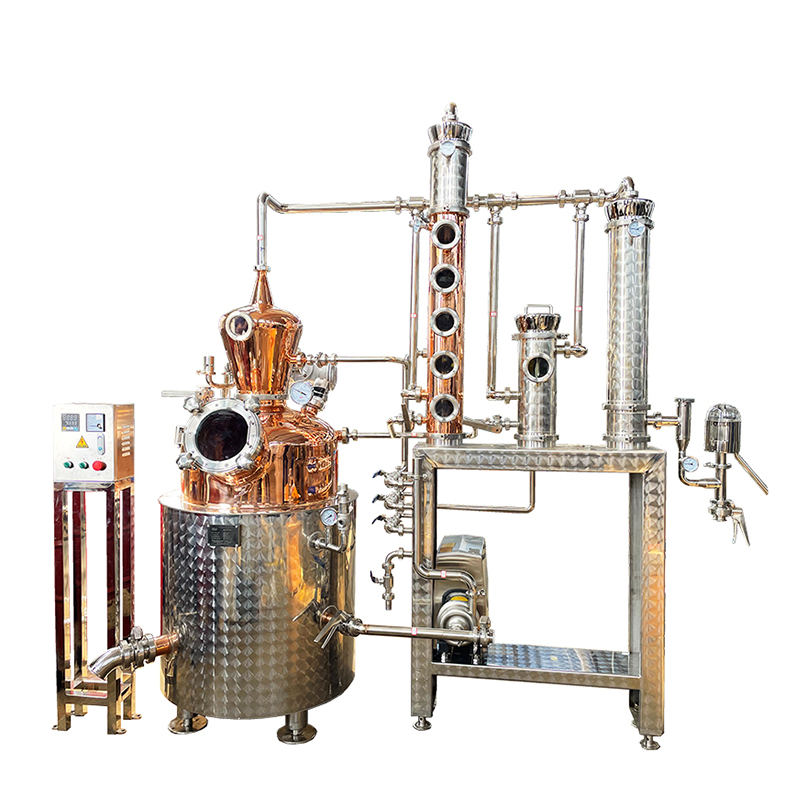
Behind every successful distillery is a carefully chosen set of distillery equipment. The type, size, and design of this equipment determine not only how much spirit can be produced, but also how it will taste and how efficiently the operation runs.
Key pieces of equipment in a distillery usually include:
Mash tun or cooker
Used to mix grains and water and to heat them during mashing.
Designed for even heat distribution and easy cleaning.
Fermentation tanks
Vessels where yeast converts sugars into alcohol.
Often made from stainless steel, sometimes wood.
Equipped with temperature control, agitation, and sealed tops or open designs depending on the style.
Stills
The heart of the distillery.
Pot stills: Often copper, with a round pot and tall neck.
Column stills: Tall columns with plates or trays, allowing for continuous production and high purity.
Condensers
Coiled tubes or shell‑and‑tube heat exchangers that cool vapors back into liquid.
Receivers and spirit safes
Vessels and enclosed glass boxes used to collect, measure, and monitor the distillate.
Allow the distiller to manage cuts and ensure quality without exposing the spirit to the open air prematurely.
Storage tanks and barrels
Stainless tanks for holding high‑proof spirit before dilution or blending.
Oak barrels for short or long‑term aging.
Alongside the main equipment, a distillery depends on several support systems:
Cooling systems – Chillers, cooling towers, and glycol loops to manage condensation and fermentation temperatures.
Heating systems – Steam boilers or electric heating elements for stills and cookers.
Pipes, pumps, and valves – To move liquids between equipment safely and hygienically.
Automation and control panels – For monitoring temperature, flow rates, pressures, and timing.
CIP (Clean‑in‑Place) systems – Automated cleaning circuits that sanitize tanks, lines, and stills.
Safety is also a critical consideration. Distillery equipment must be designed with explosion‑proof components, ventilation, proper drainage, and clear emergency protocols because high‑proof alcohol and vapors are flammable.
Anyone planning a new distillery must think carefully about:
Capacity – Current production targets and future expansion.
Spirit type – Whiskey, gin, rum, vodka, or a combination; each may require specific still designs or accessories.
Material – Copper for its reactive properties and flavor influence, stainless steel for durability and cost.
Flexibility – Whether the equipment should handle multiple products.
Working with experienced suppliers of distillery equipment can help ensure that layout, utilities, and process design meet both production goals and regulatory standards.
Not all distilleries are the same. The raw materials, techniques, and legal rules define both the type of distillery and the spirits it produces.
Whiskey distillery
Uses grain mash, typically distilled in pot stills or a combination of pot and column stills.
Spirits are aged in oak barrels, sometimes for many years.
Regional styles (like Scotch, Irish whiskey, or American bourbon) have specific rules regarding ingredients, barrels, and aging times.
Vodka distillery
Focuses on producing a very pure, neutral spirit.
Commonly uses column stills with multiple distillations and extensive filtration.
Can start from grains, potatoes, or other fermentable bases.
Rum distillery
Uses molasses or sugarcane juice as the base.
May rely on pot stills, column stills, or a combination.
Often ages rum in barrels, creating styles from light and crisp to dark and richly flavored.
Gin distillery
Starts with a neutral spirit, then redistills with botanicals, most importantly juniper.
May use pot stills with botanical baskets or other setups.
Produces styles from classic London Dry to contemporary botanical gins.
Brandy and fruit spirit distillery
Uses fermented fruit juice, typically grapes, apples, or stone fruit.
Often aged in wood to develop rich, layered aromas.
Absinthe and specialty spirit distillery
Produces high‑proof spirits flavored with botanicals such as anise and wormwood.
Known for strong flavors, distinctive colors, and particular serving traditions.
Craft or artisan distillery
Usually small and independent.
Focuses on unique recipes, local ingredients, and hands‑on production.
Often operates tasting rooms and offers tours.
Regional or commercial distillery
Larger operations supplying national or international markets.
Often invests in automation, high‑capacity distillery equipment, and sophisticated blending programs.
Contract distillery
Produces spirits for other brands or private labels.
Allows new brands to enter the market without building their own facilities.
Distilleries are often compared to breweries, since both use fermentation and similar raw materials. However, there are important differences.
Core process
Brewery: Fermentation only; produces beer at relatively low alcohol strength.
Distillery: Fermentation + distillation; produces higher‑proof spirits.
End products
Brewery: Beer, sometimes non‑alcoholic products.
Distillery: Whiskey, gin, vodka, rum, brandy, and other spirits.
Equipment
Brewery: Brewhouse (mash tun, lauter tun, kettle), fermenters, conditioning tanks.
Distillery: Fermenters plus stills, condensers, spirit safes, and aging warehouses.
Regulations and tax
Distilleries generally face more stringent controls due to the higher alcohol content and taxation structure.
Some businesses now combine both functions, operating as a brewery‑distillery. In such operations, the same brewing system that makes beer can produce the fermented wash used in the still.
Distilleries are more than production facilities. They play significant roles in economies, culture, and experiences for consumers.
Job creation – Distilleries employ distillers, engineers, warehouse workers, sales teams, and hospitality staff.
Agricultural support – They purchase grains, sugarcane, fruit, and botanicals from farmers, supporting local agriculture.
Tourism and hospitality – Many distilleries attract visitors, boosting local restaurants, hotels, and transport services.
Distilling has a long history, with roots stretching back to ancient civilizations. Over centuries, distilleries have:
Helped shape regional identities—think Scotch whisky, Kentucky bourbon, Caribbean rum, or agave spirits.
Preserved and evolved local traditions, such as specific mash bills, pot still designs, or aging practices.
Contributed to rituals, celebrations, and culinary culture.
The modern craft distilling movement has revived interest in heritage methods, small‑batch production, and terroir‑driven spirits.
Visiting a distillery offers a behind‑the‑scenes look at:
How raw materials are transformed into spirits
The role of distillery equipment in flavor and quality
The differences between spirit styles and brands
Tasting rooms allow visitors to sample products, understand flavor profiles, and learn how to enjoy spirits responsibly. Educational experiences help consumers appreciate the skill and investment that go into each bottle.
Different organizations and platforms describe the concept of a distillery from their own angles. Their viewpoints highlight how varied and complex this subject can be.
Describes a distillery mainly as a production facility centered around specialized stills and process systems.
Emphasizes technical design, equipment selection, and process efficiency as the core of a successful distillery.
Focuses on how choices in distillery equipment shape yield, purity, and flavor outcomes.
Explains a distillery by walking readers through each stage of production, from mashing and fermentation to distillation, aging, and bottling.
Focuses on clear, educational explanations of how different still types and process steps generate different styles of spirits.
Highlights the importance of distillation in distinguishing spirits from beer and wine.
Defines a distillery in the wider context of distilled spirits as a category of alcoholic beverages.
Emphasizes distilled spirits as high‑alcohol products obtained by concentrating fermented liquids.
Places distilleries within historical, legal, and technical frameworks governing spirit categories.
Views a distillery as the central site for alcohol distillation, with a strong focus on process control and safety.
Stresses the importance of managing temperatures, pressures, and fraction cuts to produce safe, consistent spirits.
Highlights the industrial and commercial aspects of distilleries in supplying various alcohol products.
Describes a distillery largely through its contrast with a brewery, underlining the additional distillation and often aging steps.
Focuses on differences in process flow and equipment, especially the role of stills and associated systems.
Presents the distillery as a facility that requires custom‑engineered sanitary systems and compliant equipment.
Defines a distillery as a place where spirits like gin, vodka, whiskey, and rum are created through selective boiling and condensation.
Breaks down the distillation process into accessible stages, including the use of trays, condensers, and receivers.
Points out the diversity of distillery types based on the spirit they specialize in.
Explains distilleries by detailing how spirits are made, focusing on mash preparation, fermentation, distillation, aging, blending, and bottling.
Emphasizes distillation as the separator between fermented beverages and distilled spirits.
Uses practical examples—such as legally defined bourbon—to illustrate how production rules guide what happens inside a distillery.
Shows that people searching “What Is Alcohol Distillery?” want:
Clear definitions of what a distillery is
Step‑by‑step distillation process explanations
Comparisons between distilleries, breweries, and wineries
Information on distillery equipment and how to start or operate a distillery
Reflects both general consumer interest and professional, business‑oriented questions about distilleries.
Whether you’re an aspiring brand owner or exploring partnership opportunities, understanding how to plan for a distillery is essential.
Key considerations include:
Product focus – Decide which spirits to produce first (e.g., gin and vodka for faster market entry, whiskey for long‑term aging programs).
Legal and regulatory requirements – Licensing, permits, tax registration, health and safety codes.
Facility and layout – Adequate space for mash, fermentation, distillation, storage, bottling, and visitor areas if applicable.
Distillery equipment – Selecting the right size and type of mash tuns, fermenters, stills, condensers, and automation systems.
Scalability – Designing the distillery so production can grow without having to rebuild the entire plant.
Working with experienced engineers, equipment manufacturers, and consultants can make the difference between a costly learning curve and a smooth launch.
A distillery is far more than a building with copper stills. It is a carefully designed environment where science, engineering, and tradition turn simple ingredients into complex, characterful spirits.
From mashing and fermentation to distillation, aging, blending, and bottling, every step in the distillery has a direct impact on quality and style. The choice of distillery equipment, materials, and processes shapes not only efficiency and safety, but also the aromas and flavors that reach your glass.
Understanding how a distillery works deepens appreciation for every sip, guides smarter buying decisions, and provides essential insight for anyone considering a venture into the world of spirits. Whether you are visiting a local craft distillery or exploring global brands, you now have a clear picture of what happens behind the scenes—where grain, fruit, and sugar are transformed into the spirits we enjoy.


