
Understanding liquid measurements is crucial in many industries, from bartending to distilling. One common question is: How many oz are in 750 ml? This question is especially important for bartenders, distillers, and anyone handling liquids. Accurate measurements ensure consistency, proper serving sizes, and help manage inventory efficiently. In this article, we will explore the conversion from milliliters to ounces, the significance of the 750 ml bottle, and the vital role of Distillery Equipment in achieving precision in liquid handling.
Converting milliliters to ounces is essential in several contexts. Bartenders often need to calculate drink portions, distilleries must ensure consistent product measurements, and cooks rely on precise quantities for recipes. In industries such as hospitality and distilling, understanding the precise number of ounces in a bottle can directly impact operational efficiency and customer satisfaction. Accurate measurements also help reduce waste, ensuring that each drink or bottle is used optimally.
For instance, a bartender may need to know how many 1-ounce portions are in a bottle to estimate the number of cocktails left. This also extends to distilleries, where liquid measurement accuracy ensures compliance with industry regulations and guarantees that each bottle contains the advertised alcohol content. In food preparation, cooking recipes often require precise measurements for liquid ingredients, meaning knowing how many ounces are in a milliliter is crucial.
To understand the relationship between milliliters and ounces, it's important to know that 1 U.S. fluid ounce equals 29.57 milliliters. This conversion factor is used universally in recipes, bartending, and distilling to ensure accurate measurements. Understanding this is especially important in industries like distilling, where product consistency is paramount.
● Example: when converting 750 ml to ounces, the calculation is:
750 ml ÷ 29.57 ml/oz = 25.36 oz
This means that a 750 ml bottle contains approximately 25.36 ounces. By using this conversion, bartenders, distillers, and chefs can ensure that they're measuring the correct volume of liquid for their needs, whether it’s for a cocktail, spirit, or recipe.
As we've seen, 750 ml equals 25.36 fluid ounces. This is a precise measurement that can be used across various applications. For bartenders, this means that a 750 ml bottle of liquor provides approximately 25 ounces of liquid. If you're using a standard shot of 1.5 ounces, this bottle would provide around 16-17 shots. This knowledge is vital for planning stock and ensuring consistency in drink preparation.
In addition, knowing the number of ounces helps distillers maintain quality control during production. If a distillery is bottling spirits, they need to ensure that each bottle contains precisely 750 ml, or 25.36 oz, to guarantee that the alcohol content matches the labeling.
The 750 ml bottle size is extremely common in the alcohol industry, particularly for wine and spirits. This size, often referred to as a "fifth," is the standard bottle size for wine, and many spirits like vodka, rum, and gin are also sold in this format. For example, a typical wine bottle holds 750 ml, which translates to approximately 25.36 oz. This is a convenient size for both individual consumption and sharing during meals or celebrations.
● Example: the 750 ml size is crucial in creating consistent products.
It's the most widely used bottle size, and knowing that each bottle contains 25.36 oz allows distilleries to plan for inventory management, pricing, and packaging.
The 750 ml bottle size became standard for multiple reasons. Historically, the "fifth" referred to one-fifth of a gallon, a common U.S. liquid measurement. Over time, as the U.S. transitioned to the metric system, 750 ml became the universal bottle size for alcoholic beverages, particularly wine and spirits. This transition simplified the production and distribution processes, as the 750 ml size could be used in markets across the world, facilitating international trade.
For distilleries, maintaining the 750 ml bottle size is practical for both production and marketing. It streamlines the manufacturing process, ensuring consistency across all bottles, and provides a uniform standard for consumers.
Measurement Type | Historical Reference | Metric Conversion | Impact on Industry |
Fifth (1/5 gallon) | One-fifth of a gallon | 750 ml | Standardized bottle size for wine and spirits, simplifying global trade |
750 ml bottle | Common in the U.S. for liquor | 25.36 oz | Consistency across products, easy for distilleries to maintain quality and streamline production |
Global Transition | U.S. transitioned to metric | 750 ml | Facilitates international trade and simplifies distribution globally |
In the U.S., a standard shot is typically 1.5 ounces. This is the amount commonly used for alcoholic drinks, whether it's whiskey, tequila, or rum. Knowing the shot size is essential for bartenders and distillers, as it helps with portion control and ensures customers receive the right amount of alcohol per drink.
This standardization allows for consistency in the bar environment, helping both customers and bartenders maintain expectations of how much alcohol is in their drinks. For distilleries, it also ensures that each bottle can be divided into a set number of servings, making inventory management easier.
If you have a 750 ml bottle and a standard shot size of 1.5 oz, you can expect to get approximately 16 to 17 shots from one bottle. Here's the math:
750 ml ÷ 29.57 ml/oz = 25.36 oz
25.36 oz ÷ 1.5 oz per shot = 16.9 shots (around 17 shots)This calculation is helpful for bartenders who need to manage how many servings are left in a bottle, allowing them to order stock more efficiently.
In a busy bar environment, accurate pouring is crucial to avoid over-pouring or under-pouring drinks. Many bartenders use liquid measuring tools or Distillery Equipment to measure exact portions. Tools like shot glasses, jiggers, and pouring spouts help ensure consistency in each drink served. For distilleries, equipment like automated filling machines ensures that every bottle contains precisely 750 ml of liquid, maintaining product quality and reducing waste. These measures are essential for reducing the risk of costly mistakes, such as serving oversized portions or underfilling bottles.
Measurement | Value |
Standard Shot | 1.5 oz |
Shots per 750 ml | 16-17 shots |
Bottle Size | 750 ml |
Shot Size | 1.5 oz |
For distilleries, accuracy in liquid measurement is vital. Distillery equipment such as automated bottling lines, precision scales, and volume meters help ensure each bottle of liquor or wine contains the exact amount of liquid specified. These tools help maintain consistency in product strength and flavor, which are crucial for customer satisfaction and compliance with regulations.
Inaccurate measurements can lead to variations in taste, legal issues, and financial loss, especially when products are marketed with specific alcohol content labels. Distilleries rely on high-precision equipment to guarantee that every batch is consistent and within specifications.
Moreover, distillery equipment plays a crucial role in improving operational efficiency. Automation in the measurement process not only enhances accuracy but also reduces labor costs and the potential for human error.
Equipment | Purpose |
Automated Bottling Lines | Ensures precise filling of each bottle |
Precision Scales | Maintains consistency in product weight |
Volume Meters | Measures exact liquid volumes for accurate filling |
Automated Systems | Reduces labor costs and human error, enhancing efficiency |
Several tools are commonly used in distilleries to measure liquid volumes accurately:
● Flow Meters: These measure the flow of liquid through pipes and help ensure that precise amounts are dispensed during the production process.
● Bottling Machines: These machines fill bottles to a precise level, ensuring consistency across all units produced.
● Automatic Scales: Used for measuring ingredients and final product weight to ensure proper proportions.
● Viscometers: Measure the viscosity of liquids, ensuring that the right texture and consistency are achieved.
These instruments ensure that products meet both regulatory requirements and consumer expectations, helping distilleries maintain their reputation and reduce waste.
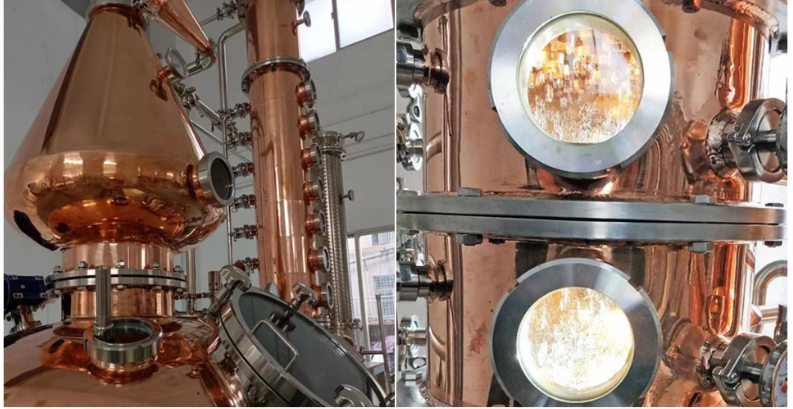
While 750 ml is the standard size, liquor bottles come in various sizes depending on the spirit type and brand. Here's a comparison:
Bottle Size | Volume (ml) | Ounces (fl oz) | Approx. Shots (1.5 oz) |
Miniature | 50 | 1.7 | 1 |
Quarter Pint | 100 | 3.4 | 2 |
Half Pint | 200 | 6.8 | 4 |
Pint | 375 | 12.7 | 8 |
Fifth (750 ml) | 750 | 25.4 | 16-17 |
Liter | 1000 | 33.8 | 22 |
Magnum | 1500 | 50.7 | 34 |
When selecting a bottle size, consider the occasion and the number of guests. For home use or small gatherings, a 750 ml bottle is typically sufficient. However, for larger parties or bars, larger bottles like magnums or handles (1.75 liters) may be more efficient. Knowing how many servings each bottle provides helps plan for an event without over-purchasing.
Larger bottles are often more cost-effective for bars and restaurants that serve a high volume of drinks. Distilleries should assess market demand and customer preferences when deciding which bottle sizes to produce, ensuring that their offerings align with consumer expectations.
Bottle size significantly impacts pricing strategies. Larger bottles typically offer a better per-ounce price but require more upfront investment. Distilleries need to balance product size with pricing to meet consumer demand while optimizing profit margins. Understanding market preferences and distribution channels helps determine whether smaller or larger bottles are more appropriate.
To estimate how many servings a 750 ml bottle provides, simply divide the total volume by the shot size. For example, a 750 ml bottle provides about 16-17 shots, assuming each shot is 1.5 oz. This is helpful for bars and restaurants to plan drink servings.
Understanding servings per bottle also helps distilleries manage production schedules and avoid overproducing or underproducing a particular product. Proper inventory tracking ensures that businesses can meet demand without waste.
Accurate knowledge of bottle sizes and servings helps businesses effectively manage their liquor inventory. By tracking how many servings are left in a bottle, bars can avoid running out of stock unexpectedly. Distilleries and liquor stores also use this knowledge to maintain inventory levels and minimize waste.
Effective inventory management prevents stockouts and ensures that bars or restaurants can serve customers without interruptions. Distilleries can use this knowledge to optimize production, ensuring they have enough stock to meet consumer demand while avoiding excess that ties up capital.
Automated inventory management systems, supported by Distillery Equipment, can help track stock levels and optimize orders. This technology allows businesses to predict usage patterns and reduce the likelihood of overstocking or understocking. The integration of Distillery Equipment into inventory management systems helps improve overall operational efficiency.
Process | Function |
Estimating Servings | Calculate number of shots per 750 ml bottle |
Inventory Management | Track servings to avoid running out of stock |
Using Distillery Equipment | Optimize stock tracking with automated systems |
Knowing how many ounces are in a 750 ml bottle is essential for accuracy in bartending, distilling, and inventory management. Using Distillery Equipment, businesses can ensure precise measurements, improve product quality, and optimize operations. Understanding conversion rates, shot sizes, and bottle sizes helps manage pricing and inventory. With the right tools and knowledge, companies like ZPET offer valuable solutions that enhance consistency and service, making a significant impact in the industry.
A: A 750 ml bottle contains approximately 25.36 fluid ounces.
A: The 750 ml size, also known as a "fifth," became standard due to historical measurement practices and international trade. It ensures consistency in product packaging across the industry.
A: Distillery Equipment uses precision tools like automated filling machines to ensure each bottle contains the exact volume, maintaining product consistency and quality.
A: A 750 ml bottle provides about 16 to 17 standard 1.5 oz shots.
A: Bartenders need to understand the conversion to accurately measure servings, manage inventory, and maintain consistent drink quality using proper Distillery Equipment.
A: Distillery Equipment helps streamline production and manage inventory by providing accurate liquid measurement, preventing waste, and optimizing stock levels.


